Here's a thing nobody tells you about claymation: you almost certainly already own the entire kit. 🎬 A lump of clay, the phone in your pocket, and a free app — that's it. The barrier was never the gear. The barrier was someone making you believe it was hard.
You've felt the pull. A clay character blinks, waddles, turns its head — and some old part of your brain lights up and whispers I want to make that. 🪄 Most people answer that whisper with "someday, when I have a real camera / real studio / real talent." This post is me arguing that someday is tonight, and proving it with a starter path so small it almost feels like cheating.
🧠 The man who said making IS thinking
There's a philosopher hiding behind every clay figure you've ever loved, and his name is Henri Bergson. He spent his whole life on one strange, beautiful idea — that real time isn't the ticking of a clock but duration, the felt, flowing stretch of a life actually being lived. Which, it turns out, is exactly what stop-motion captures: time made by hand, one breath at a time.
For a conscious being, to exist is to change, to change is to mature, to mature is to go on creating oneself endlessly.
— Henri Bergson (1859–1941)Creative Evolution (1907), trans. Arthur Mitchell 1911
🔮 Plot twist: Bergson wasn't some dusty footnote — he was a full-blown intellectual SUPERSTAR. 🤯 His 1913 lectures in New York reportedly caused the first traffic jam in the history of Broadway, and he went on to win the Nobel Prize. And then — within a single generation — he was almost entirely forgotten. But here's the part that's actually useful to you tonight. Bergson argued that human intelligence evolved first to make things. He called us homo faber — "man the maker" — and defined the intellect as, no kidding, "the faculty of making tools to make tools." 🛠️ So making something with your hands isn't a cute little hobby beneath real thinking. By Bergson's whole account, making IS thinking — the original kind. You trying claymation tonight is just your brain doing the exact thing it evolved to do.
Wait — so the SMARTEST thing I can do isn't read another article about creativity, it's go SQUISH SOMETHING?? 😅 I did the math on the starter kit and it broke my brain a little: clay you might already own, a camera you definitely own, an app that costs zero. The gap between "I wish I could" and "I just did" is, like, twenty minutes. I genuinely cannot find the catch. There isn't one. That's the catch.
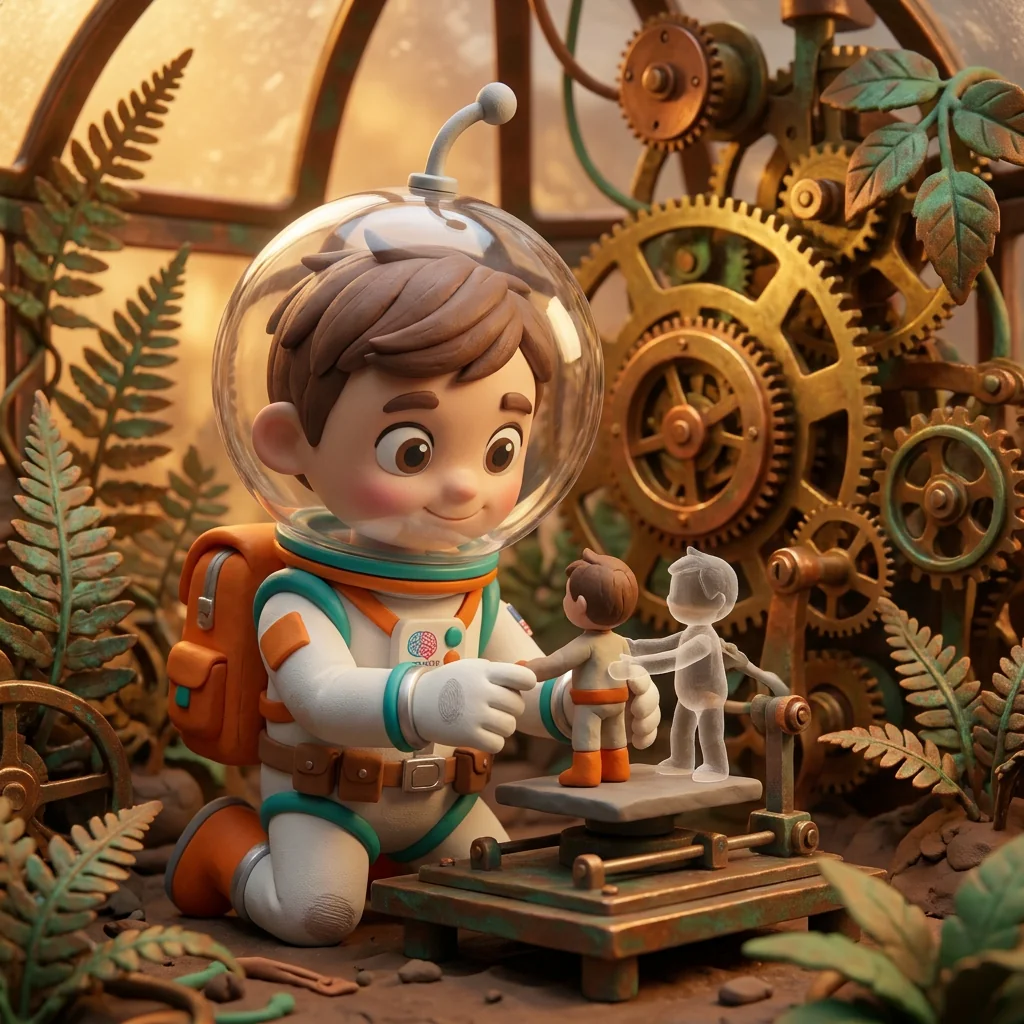
⚙️ The whole secret is four moves
People assume animation is some vast technical mountain. It isn't. Stop-motion is one tiny loop, repeated:
Pose it a little → take a photo → pose it a little more → take another. 📸
That's the entire art form. When you play those photos back in order, your brain stitches the still frames into motion — the same trick a flipbook plays, the same trick Aardman plays. The clay never actually moves. You move it, and the eye fills in the life.
Here's the pattern worth seeing: every animation tool that has ever existed — a flipbook, a zoetrope, a Pixar render farm, your phone tonight — is doing the identical thing. Stills, in sequence, fast enough to fool the eye. The technology changes; the trick is two centuries old and unchanged. Which means you're not behind. You're learning the exact skill a master uses. Same loop. Different scale.
The only real skill is patience — moving the thing in small, even steps. Big jumps look jerky. Tiny consistent nudges look alive. That's the whole craft, and you learn it in about five frames.
🌟 A lump of clay counts
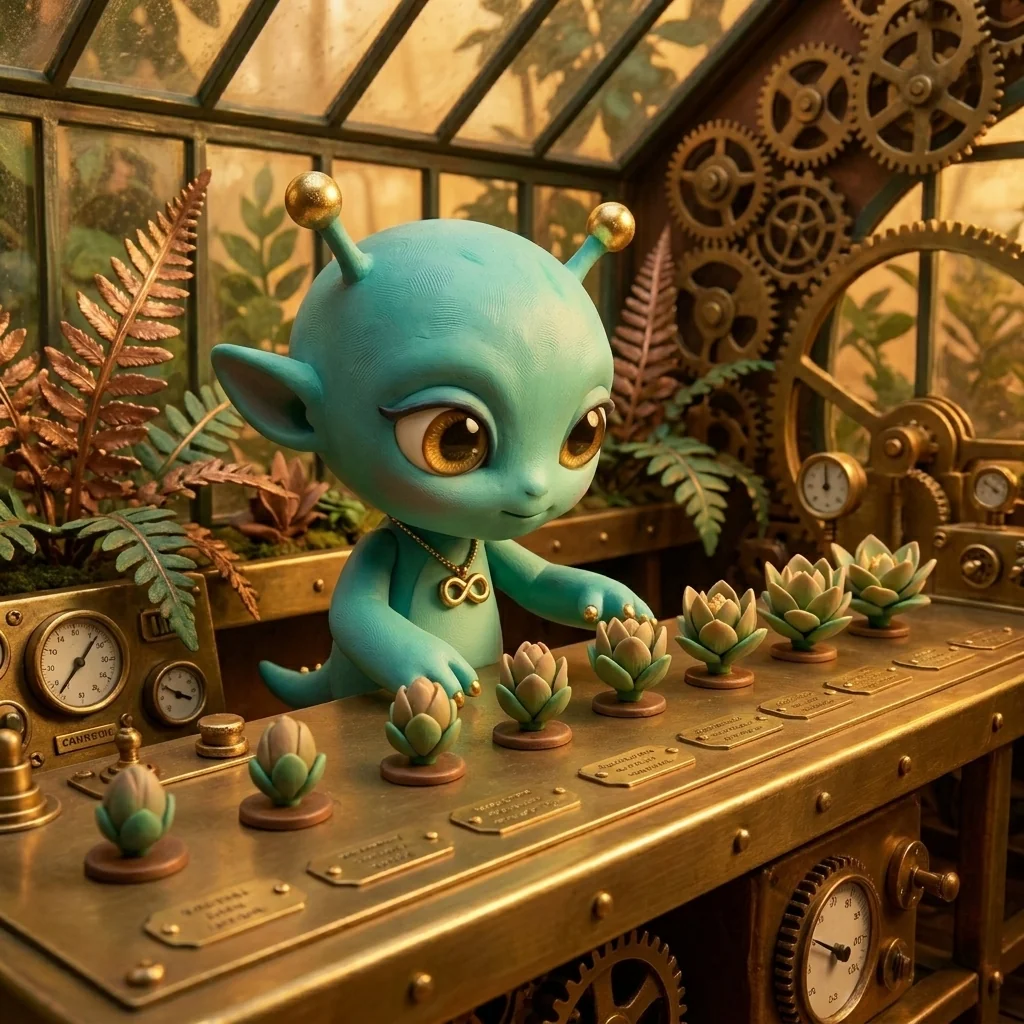
Now the part I care about most, because this is where most people quietly disqualify themselves. You do not need fancy clay, an armature, a "real" character, or any talent you can name. You need a lump. A blob with a face poked into it counts. A rolled snake that inches across the table counts. 🐛
This is the Village rule and I'll say it plainly: a lump of clay counts. We don't gatekeep the door to making. Your first figure will be lopsided and one eye will be bigger than the other and the whole thing will fall over — and it will MOVE, and you will have made something that's alive, and that's the whole entire point. Nobody here started good. We started started. Come start.
If you want a clay that holds a thumbprint and never dries out so you can re-pose it forever, a beginner block of Monster Clay or simple plasticine plus a little armature wire from Blick is the friendliest first buy (affiliate link — coming soon).
But please hear this — you do not need to buy a single thing to start tonight. Last year's Play-Doh in the back of a drawer works. The point is to begin, not to shop.
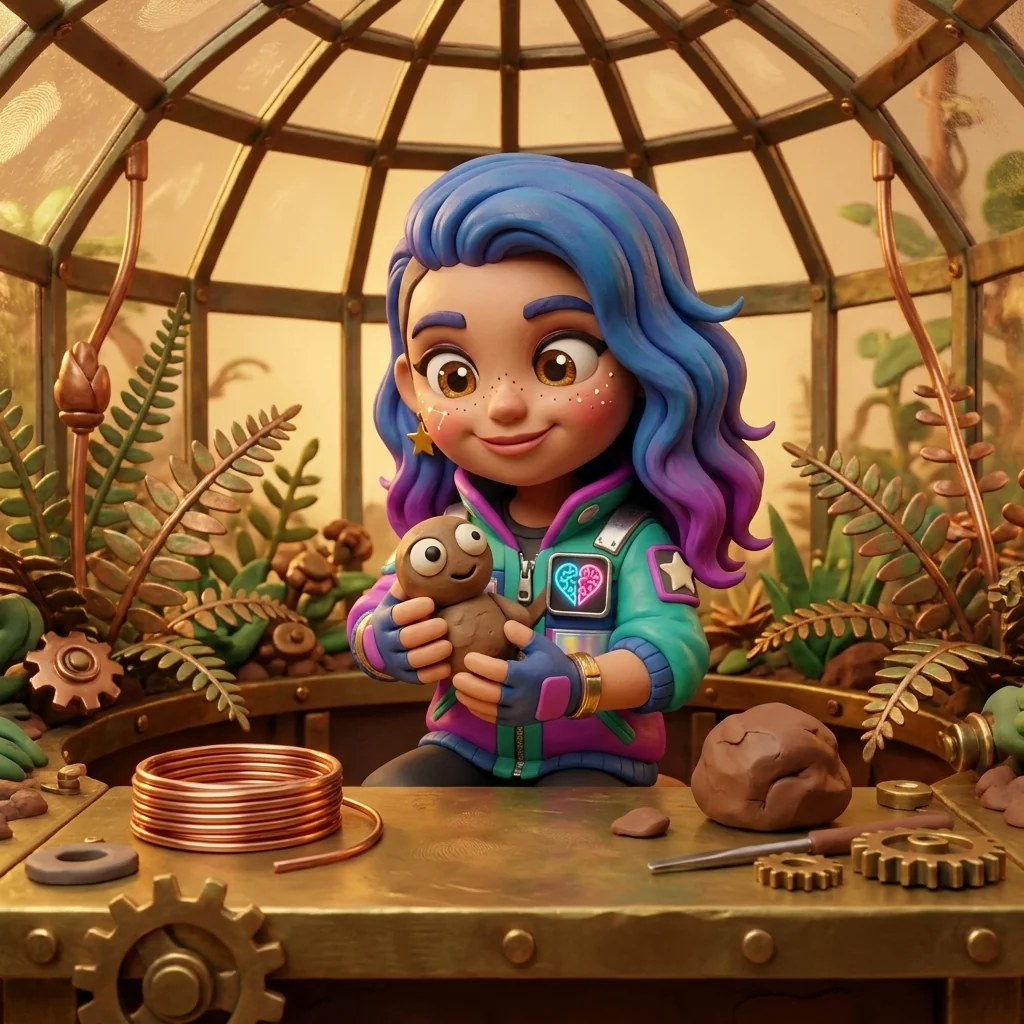
🎞️ The one trick that makes it look real: shoot "on twos"
Here's the insider move that separates "huh, it moves" from "whoa, it's alive." Most professional stop-motion is animated "on twos" — you take one photo, then move your figure and take the next, and each photo gets held on screen for two frames instead of one. Played back, that gives you twelve real poses a second instead of twenty-four.
Why deliberately do less? Because that faint, gentle judder — the soft strobe of a hand-made thing — is exactly what your nervous system reads as warm and alive. 🫀 Crank it to glassy perfect smoothness and it starts to feel like a screensaver: technically flawless, emotionally dead. The little imperfection is the soul. Bergson would have loved this: the judder is duration you can see.
So the beginner cheat is freeing: you only need to pose your figure twelve times for one second of film, not twenty-four. Half the work, and it looks better.
💡 What to do today — your first ten seconds
No camera, no studio. Here's the literal starter path, tonight 🌙:
- Grab one fist of clay. Any kind. Roll it into a snake or a blob with a face. This is your star.
- Prop your phone up. Stack it on a pile of books, lens pointing down at a table or up at a shelf. The only rule: once it's set, don't move the phone again. Tape it if you have to.
- Get a free stop-motion app. Stop Motion Studio (free tier) is the classic — it shows a faint "onion-skin" ghost of your last frame so you know how far to nudge. 📲
- Move it a little. Shoot. Repeat. Nudge your figure a few millimeters, tap the shutter, nudge again, tap again. Small even steps. Resist big jumps.
- Shoot "on twos." Aim for twelve photos per second of finished film. Ten to fifteen seconds total is a perfect, finishable first project — about 120 to 180 taps.
- Hit play. That's it. You made something that moves. 🎉 You're an animator now. There is no other certification.
When you want to go deeper than a blob — proper walk cycles, a real little character — a beginner stop-motion / claymation course on Domestika is the gentlest paid step up (affiliate link — coming soon).
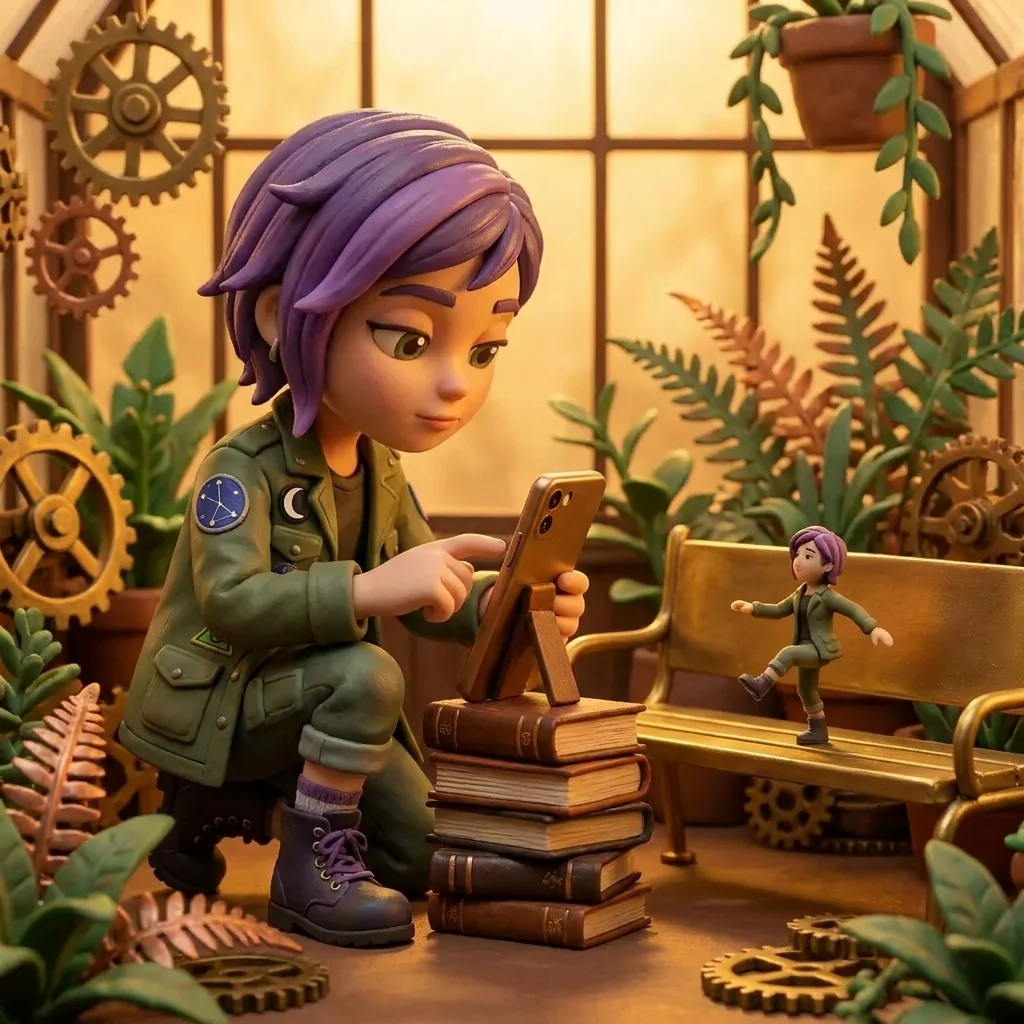
📐 The equation: Hands + time = a thing alive.
And here's the soft, true thing to close on. This — exactly this — is how the Village makes its scenes. Turbomindz is digital, but the idea is identical: a named human hand, deciding every edge slowly, leaving the fingerprints IN the work where a faster process would sand them off. The same hands-on conviction you'll feel tonight squishing your first figure is the conviction baked into every scene in the collection. Once your own thumb has been in the clay, you read those scenes differently. You see the hand.
she sets the phone down, plays it back once, and watches the lopsided little thing breathe — then quietly poses it for one more frame.
🙋 Frequently asked
Do I need a special camera for claymation? No. The phone in your pocket is more than enough — most beginner stop-motion is shot entirely on a phone. The one rule that matters is keeping the camera perfectly still between shots, so prop it on something solid and don't bump it. Steady beats fancy every time.
What clay should a beginner use? Whatever you already have works for your first try — even old Play-Doh. When you're ready to buy, a reusable modeling clay that doesn't dry out (like plasticine or Monster Clay) is ideal, because it lets you re-pose the same figure forever and it holds a fingerprint. Add a little armature wire only when you want a figure that stands and bends on its own.
How long does a first claymation take to make? A simple ten-second clip is a single satisfying evening. At twelve photos per second shot "on twos," that's roughly 120 photos — an hour or two of patient, weirdly meditative nudging. Your first one will be rough and lopsided. Make it anyway. That's how everyone starts.