There are monks who spend weeks bent over a table, placing millions of grains of colored sand one breath at a time, building a cathedral so intricate it stops your heart — and then, when it's finished and perfect, they SWEEP IT INTO A RIVER. 🤯 On purpose. Smiling. I read that and I had to put my phone down and just stare at a wall for a minute. Because if you understand WHY they do it, it quietly rearranges everything you thought beauty was for. 🚀
I've spent the last week standing — metaphorically, mostly — at the great crossroads where the whole world's art comes to trade. And I kept running into traditions that look strange at first glance. Sand you destroy. Dots that are secretly maps. Scrolls measured to your own body. But "strange" is just "I don't have the key yet." Hand me the key, and strange turns into the most beautiful thing I've ever seen.
So here are seven. Not a thin little list — a real look. Each one gets the insight that makes it click, and a steal-this rule you can carry into your own making this week. 🎨
🪐 The crossroads, and the man who said go and SEE
Before the seven, one voice — because it frames the whole journey. A thousand years ago, in a Baghdad packed with traders, scholars, and arguments, the most famous thinker of the age wrote a sentence that reads like a treasure map for everything below.
The visible world was made to correspond to the world invisible, and there is nothing in this world but is a symbol of something in that other world.
— Al-Ghazali (1058–1111)The Alchemy of Happiness, trans. Claud Field 1909
Read that again and hold it next to the sand cathedral. Nothing in this world but is a symbol of something in that other world. That's the secret hum underneath every tradition on this list — these aren't decorations. They're the visible world pointing at an invisible one. The dots point at land. The scroll points at a wound. The sand points at impermanence itself.
🔮 Plot twist: al-Ghazali wrote that after his whole life fell apart. He was the most celebrated scholar of his age — sitting at the absolute peak of his career in Baghdad, the man everyone came to hear — when he suffered a spiritual crisis so severe that he reportedly lost the physical ability to speak and teach. 😶 His voice just… stopped. So he walked away. He abandoned the post, the fame, the family, and wandered for roughly ELEVEN YEARS as a poor ascetic before he came back to write his masterwork. And here's the turn that gets me: the greatest cataloguer of knowledge who ever lived discovered that cataloguing wasn't enough — that you cannot read your way to the thing, you have to go and SEE it. So don't just read about these strange art forms. Go stand in front of one.
The man who knew EVERYTHING decided knowing wasn't the point?? 🤯 He gave up being the smartest person in the room to go be a confused pilgrim in the dust — and THAT'S when he wrote the thing that lasted a thousand years. Okay. Okay. I'm listening. Show me the seven.
🌀 1. Tibetan sand mandalas — the cathedral you sweep away
Tibetan Buddhist monks spend days, sometimes weeks, building a mandala — a vast, dizzyingly precise circular diagram of the cosmos — out of millions of grains of dyed sand, funneled grain by grain through tiny ribbed metal cones. The detail is superhuman. And the moment it's complete, they ceremonially destroy it, brushing the sand into a single grey heap and pouring it into running water. 💧
The insight: the destruction is the artwork. The whole point is impermanence — to pour weeks of devotion into something beautiful and then prove you can let it go without flinching. The grief you feel watching it swept away? That's the lesson landing. Most of us make to keep. They make to release.
🎨 Steal this: make one thing this week that you plan to destroy or give away the moment it's done. Watch how differently you work when keeping isn't the goal — how the attention sharpens when the outcome can't be hoarded.
🗺️ 2. Aboriginal dot painting — the painting that's secretly a map
Those mesmerizing Australian Aboriginal canvases — fields of concentric dots in ochre, white, and earth-red — look like pure abstraction to an outside eye. They are not abstract at all. Many are maps: aerial views of Country, where a set of concentric circles is a waterhole, parallel lines are a journey, U-shapes are people sitting. They encode water, food, ancestral routes — survival information, painted as song.
🔮 And the dots themselves carry a second secret: one reason the technique spread was concealment. The dot field can blur sacred knowledge meant only for initiated eyes, so the painting can be shared and sold while the deepest layer stays hidden in plain sight. Beauty as an encryption key.
🎨 Steal this: build one real, private meaning into your next piece — a map of a place you love, a date, a route you walk — and don't explain it. Let the work carry a truth only you can fully read.
Same truth, different clothes — keep watching for it. The sand says let go. The dots say the surface is not the whole story. The Persian miniature, in a minute, will say bend the rules of seeing on purpose. These aren't seven unrelated curiosities. They're seven cultures arriving at one idea from seven roads: the visible thing is a door, not the room. Al-Ghazali would've recognized every one of them.
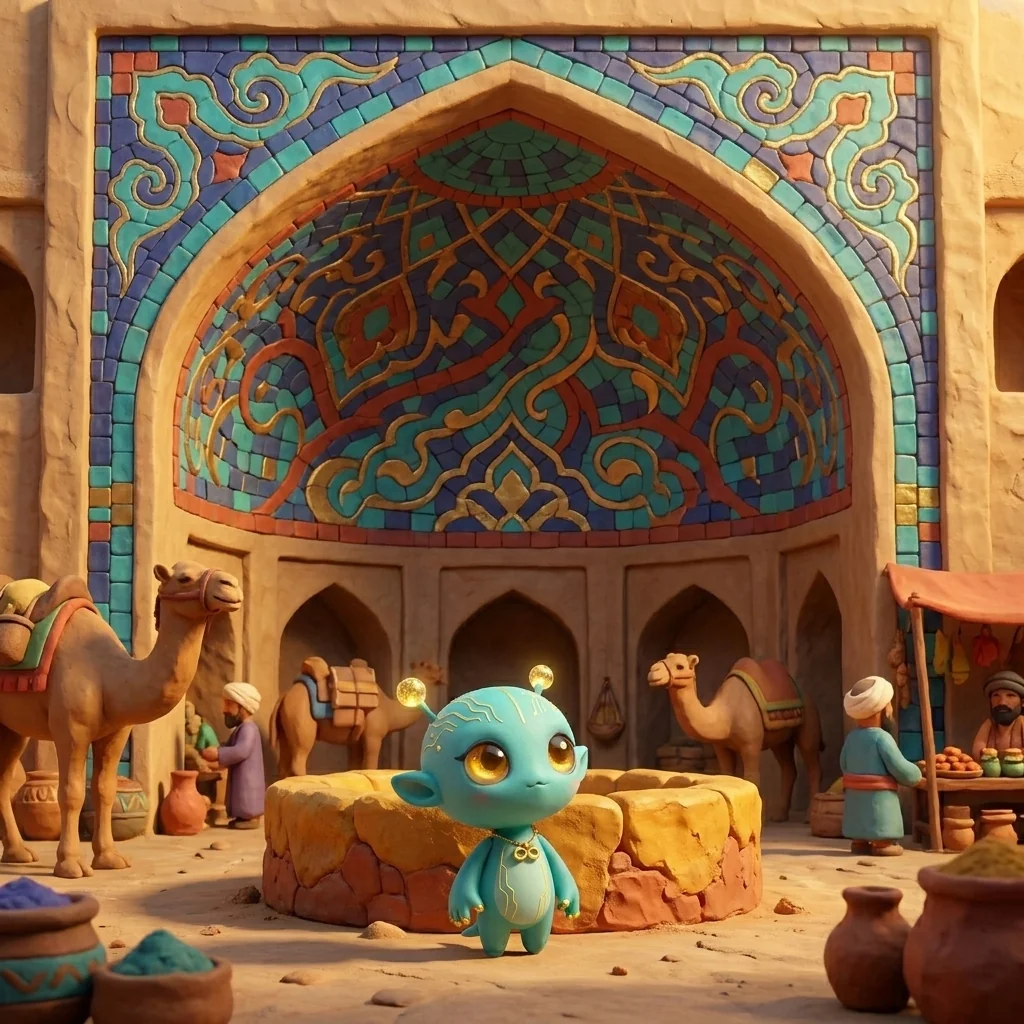
🎭 3. Indonesian batik — drawing with hot wax and patience
Javanese batik is made backwards. Instead of painting color on, the artist paints hot liquid wax onto cloth with a tiny spouted copper pen called a canting, then dyes the fabric — and the wax protects whatever it covers, keeping it the old color. Dye, boil off the wax, re-wax, re-dye, again and again. The pattern is built from everything you withheld.
The insight: batik is a discipline of negative space and delayed gratification. You can't see the finished cloth until the very end — you work the whole time on faith, drawing with absence. The crackle-veins where the wax cracks and dye seeps in? Often the most prized part. The "mistake" is the signature.
🎨 Steal this: in your next piece, define the most important shape by what you leave out — the unpainted gap, the silence, the margin. Protect a space instead of filling it.
🖋️ 4. Persian miniature — the painting that refuses one horizon
A Persian miniature is a jewel-box: impossibly fine brushwork (some brushes are a single hair), gold leaf, lapis-blue skies, gardens crowded with story. But look at how space works and your brain trips pleasantly. There's no single vanishing point. You see the carpet from above AND the people from the front AND the wall from the side, all at once. Figures float up the page instead of shrinking into distance.
The insight: that's not a "failure" of perspective — it's a richer one. The miniaturist paints what the mind knows is there, not just what one frozen eyeball would catch. You get the whole garden, every petal in focus, because importance — not distance — decides what's big.
🎨 Steal this: draw or stage one scene from two or three viewpoints at once on purpose — top-down and head-on together. Let importance, not the camera, decide what gets the detail.
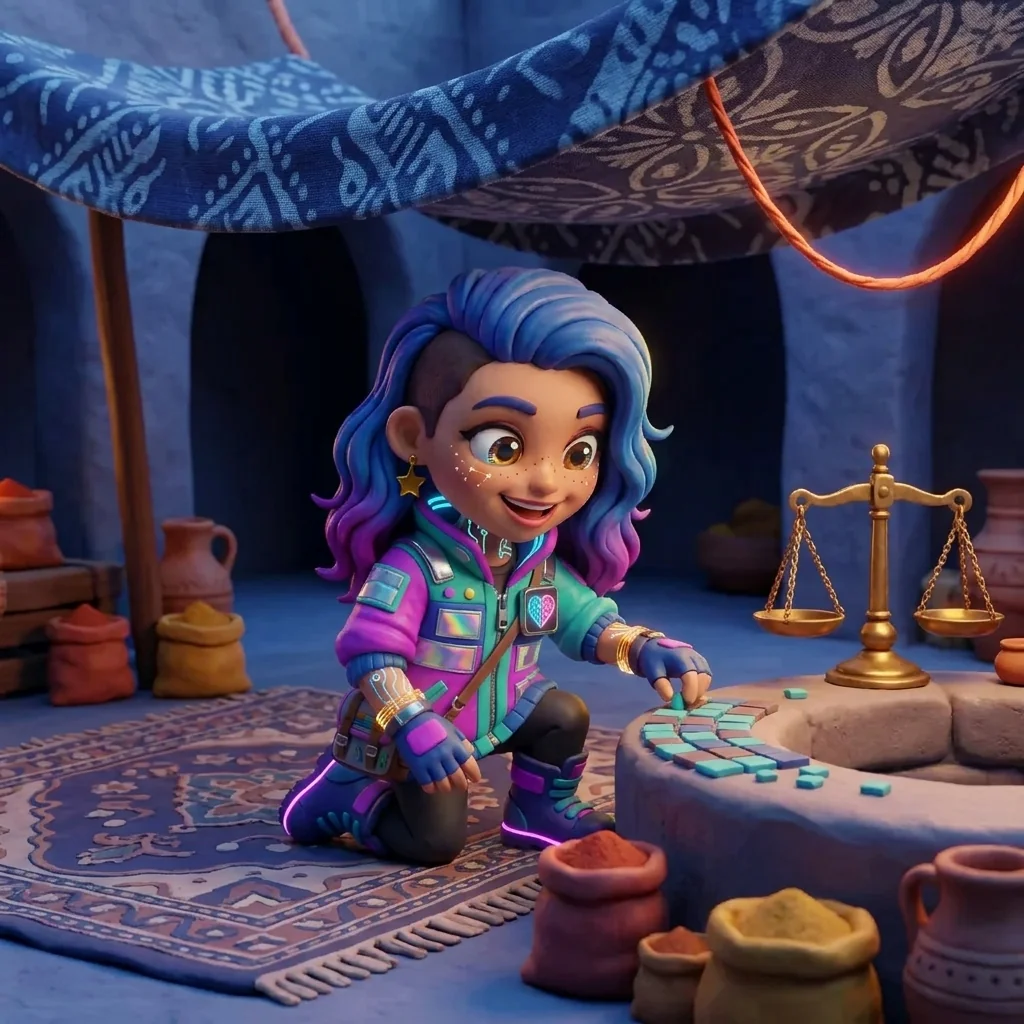
📜 5. Ethiopian healing scrolls — art measured to your body
This one undid me. In the Ethiopian Orthodox tradition, a kitab — a protective healing scroll — is made personally for one sick or suffering person. A debtera prepares it on parchment cut from a freshly treated hide, and here is the strange, tender part: the scroll is often cut to the exact height of the person it's meant to heal, so it can stand guard the length of their whole body. It's covered in geometric "talismanic" eye-motifs and prayers, rolled into a leather case, and worn or hung.
The insight: this is art with one audience of exactly one. Not made to sell, not made to hang in a gallery — made to fit a single human body and a single human crisis. The measurement is the love.
🎨 Steal this: make one thing scaled to a single specific person — their height, their hands, their room. Art that fits one body carries a weight art-for-everyone never quite reaches.
🌿 6. Navajo sand painting — the medicine you stand inside
The Navajo (Diné) make iikááh — "sand paintings" — by trickling colored sand, pollen, charcoal, and crushed stone freehand onto the ground during a healing ceremony, building intricate figures of the Holy People. There's a twist that rhymes with the Tibetan mandala but goes further: the patient sits in the middle of it. The painting isn't to look at — it's a doorway you physically enter, so the healing can pass between you and the figures. And when the ceremony ends, it too is destroyed and the sand carried away, because it has done its work.
The insight: the artwork is a verb, not a noun. It exists to do something in one afternoon, then ceases to exist. No one signs it. No one keeps it. Its whole value is the act.
🎨 Steal this: make one piece this week that's an event, not an object — something that happens once, for someone, and then is gone. A drawing made live. A thing performed and not saved.
⚙️ 7. Ghanaian Adinkra — symbols that talk
Among the Akan people of Ghana, Adinkra are stamped symbols — carved from calabash gourd, dipped in a dark bark-and-iron dye, and pressed in grids across cloth. Each one is a tiny pictograph of a proverb. Sankofa, a bird turning its head backward to take an egg from its own back, means go back and fetch what you forgot — it's okay to return for what was left behind. Gye Nyame means except for God. Dozens of them, a whole written language pressed in ink.
The insight: this is writing that looks like pattern. Every motif on the cloth is a sentence. Wearing it is speaking. Beauty and meaning aren't layered — they're the same stamp.
🎨 Steal this: invent ONE symbol of your own this week — a single mark that stands for a whole idea you live by — and use it like a signature. A glyph for a sentence you'd otherwise have to say out loud.
🏘️ The village tie: what all seven have in common
Here's what stops me, looking at all seven together: not one of them treats art as decoration you buy and forget. The sand is a prayer. The dots are a map home. The scroll fits a real body in real pain. Every single tradition is a hand doing a thing for someone — and refusing to hide that it's handmade. That's our whole ethic, told in seven languages. We keep the thumbprints in the clay for the same reason the batik-maker keeps the crackle and the Navajo healer kneels in the sand: because the proof a human was here, on purpose, for you, is the part that matters most. The village has always been global. We're just one more road meeting at the well.
✨ The payoff: strange is just the key you don't have yet
Every one of these looked weird for about thirty seconds. Sweep away the cathedral? Measure a painting to a sick man's height? Weird. Until the key turned — and then each one wasn't strange at all. It was a culture telling the truth about what beauty is for, in the only language it had.
That's the real gift of going and looking. Not "wow, exotic." But: oh — there are this many ways to be human and make something, and every one of them is right. Al-Ghazali walked eleven years to learn that you can't get it from the book. So here's the smallest version of his pilgrimage I can give you.
💡 What to do today
Pick exactly ONE of the seven — the one that made you sit up — and steal its single rule for the next thing you make. 🎨 That's it. Don't try to absorb all seven. Take one. Sweep something away when it's done (Tibet). Hide a private map in it (Australia). Build the main shape from what you leave out (Java). Paint it from two angles at once (Persia). Scale it to one person's body (Ethiopia). Make it an event, not an object (Navajo). Stamp it with a symbol you invented (Ghana). One rule, one thing, this week.
And if you want to actually learn one of these hands-on, a single world-craft course will take you further than ten articles — start with a world-art / traditional-craft course on Domestika (affiliate link — coming soon).
To go wide and see how these traditions connect across the whole map, one good world art-history book is the doorway — try a global art-history book on Bookshop.org (affiliate link — coming soon).
📐 The equation: Strangeness × the missing key = fear. Strangeness × going to SEE = wonder. Beauty is a language you haven't learned yet.
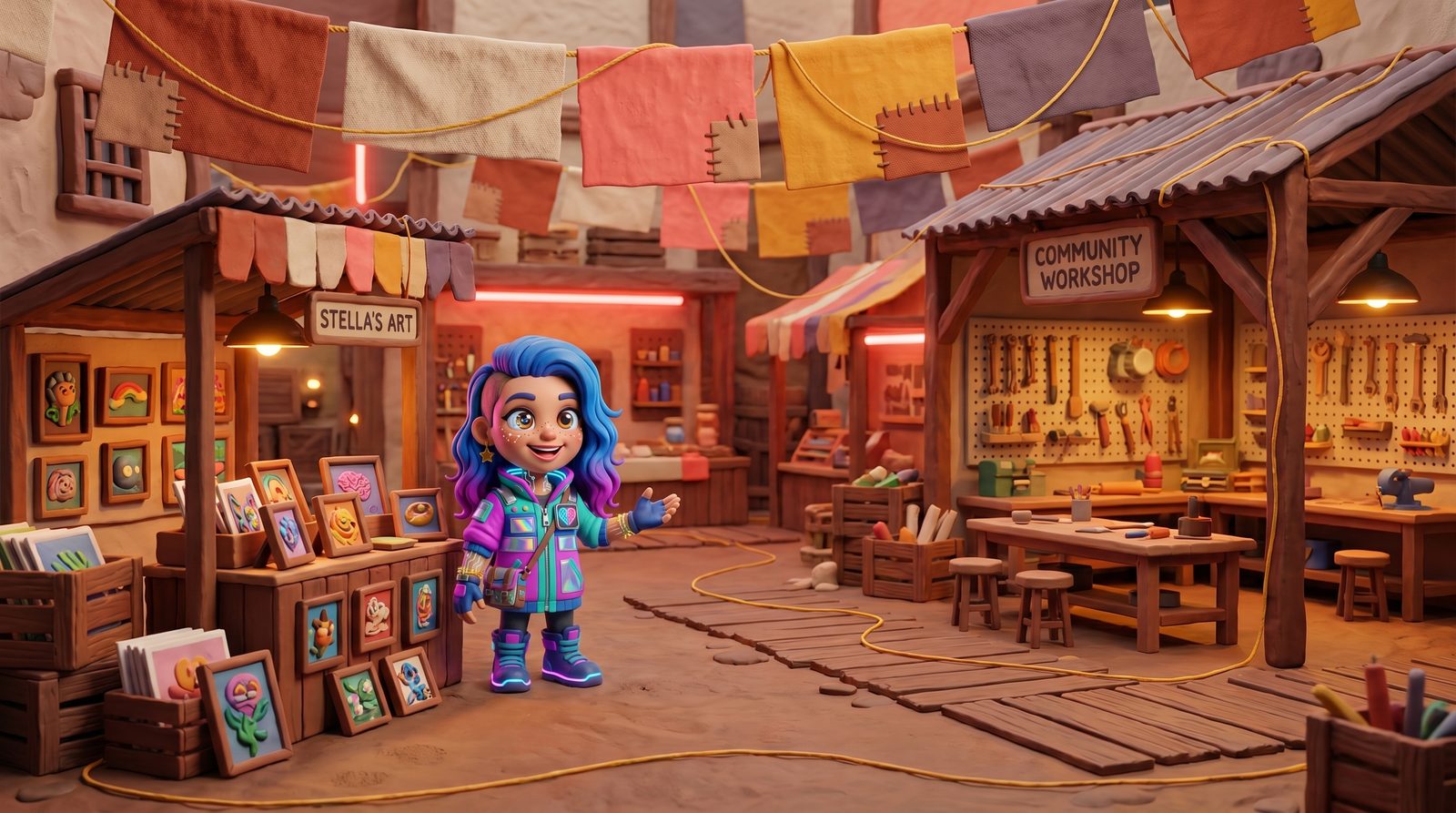
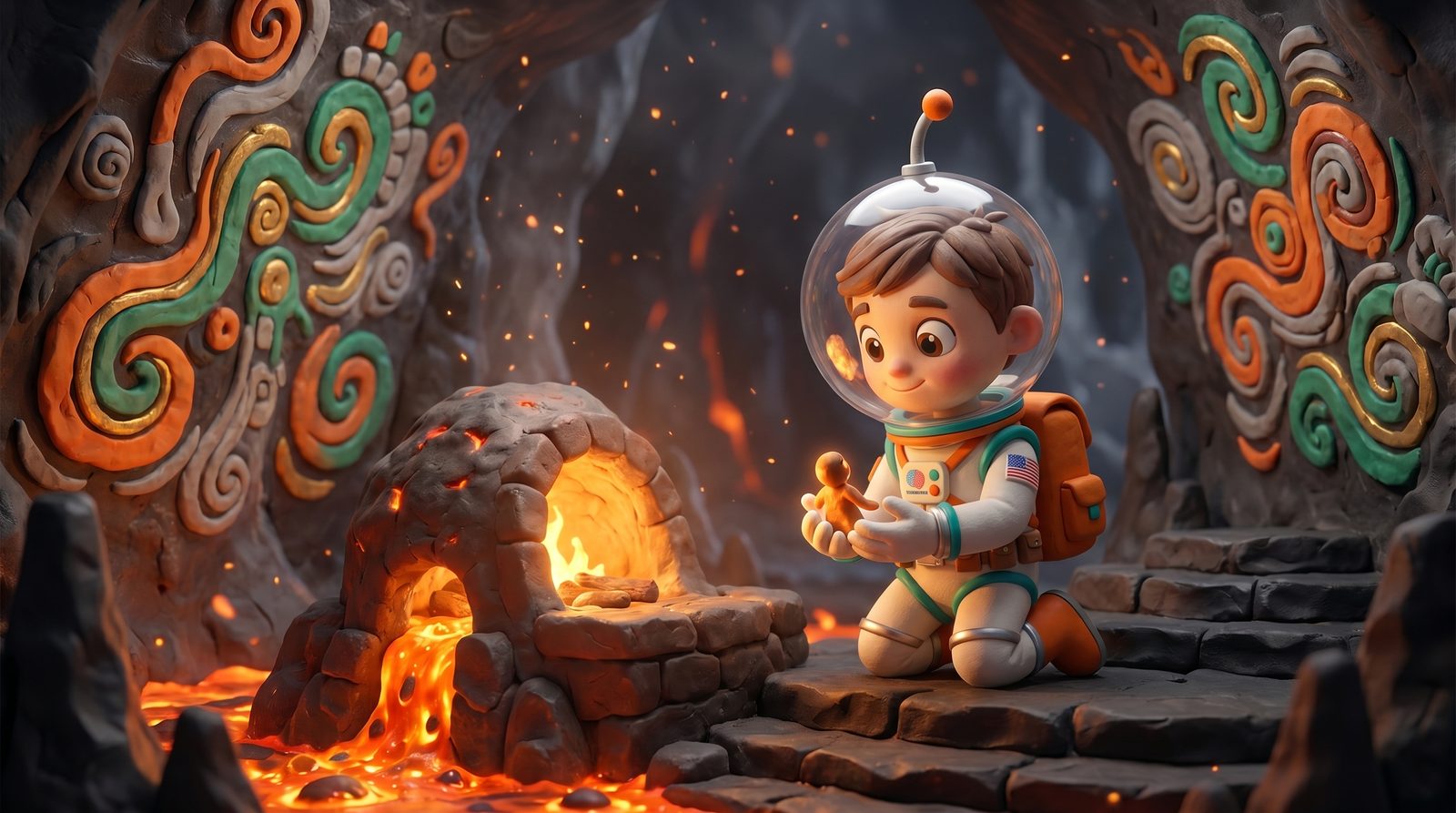
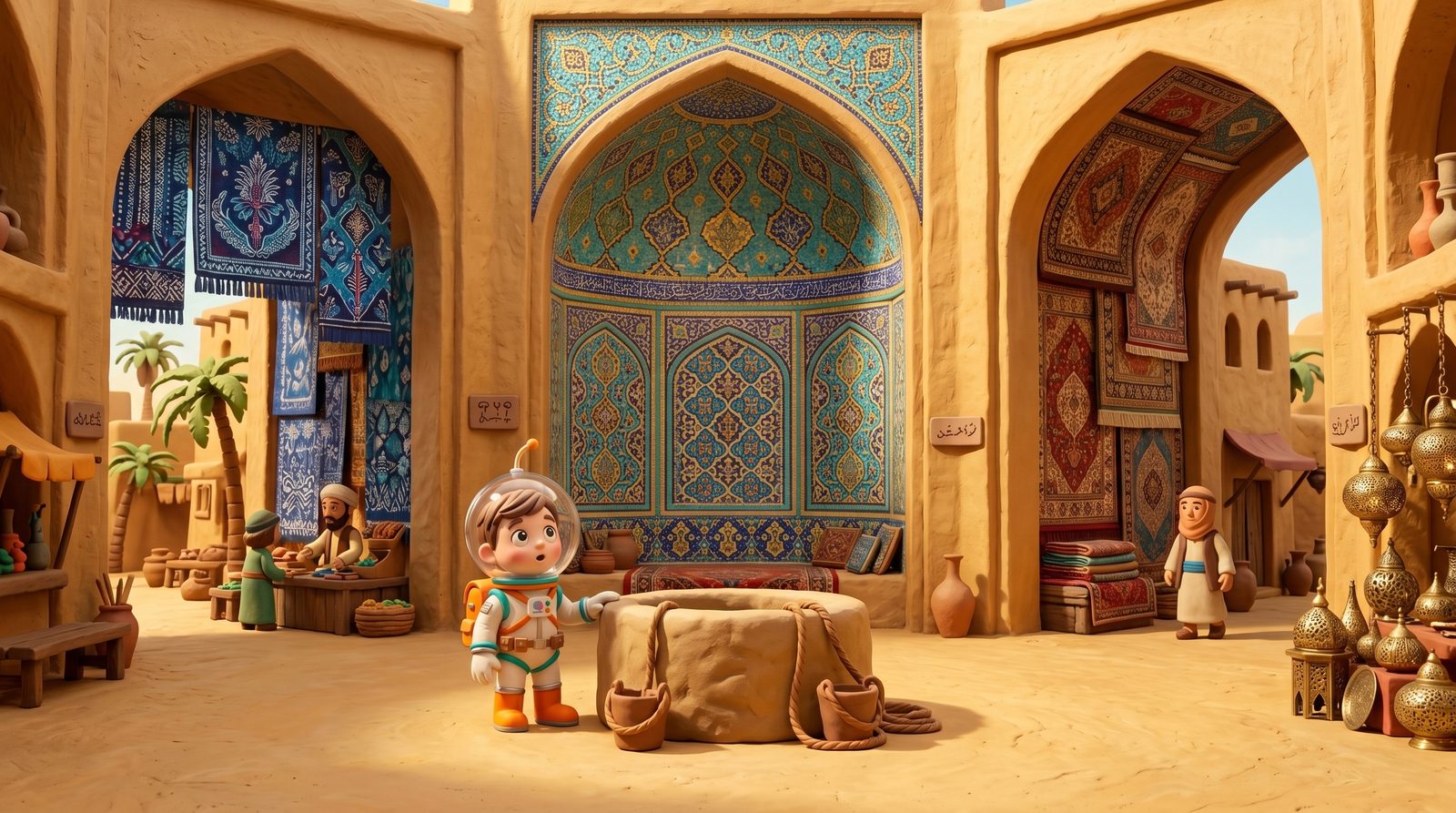
The same idea lives in the collection. The 39 Turbomindz universes are exactly this — world traditions braided into one place, batik and mosaic and sand and ink all meeting at the same well, every scene keeping its handmade seams the way these seven keep theirs. If standing at the crossroads of the whole world's art moves you the way it moves me, come wander the roads a while at /collection. 🚀
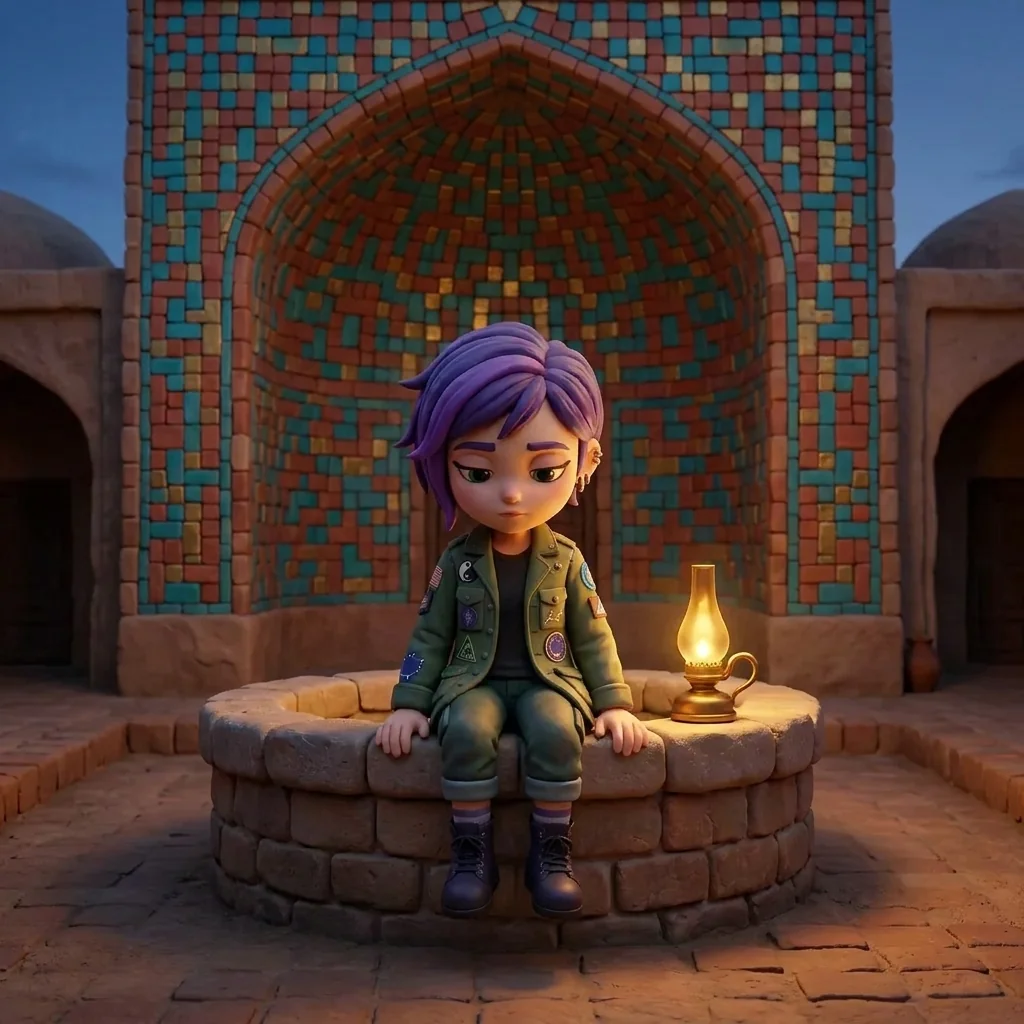
she sets one borrowed tile into the wall beside the others, and the pattern that arrived as strangers fits like it was always one cloth.
🙋 Frequently asked
What are some unusual art traditions from around the world? Seven that reward a closer look: Tibetan sand mandalas (vast sand artworks destroyed on completion to teach impermanence), Aboriginal Australian dot painting (canvases that are secretly maps of land and ancestral routes), Javanese batik (cloth patterned with hot-wax resist and repeated dye baths), Persian miniature (jewel-fine paintings with no single perspective), Ethiopian healing scrolls (parchment talismans cut to the height of the person they're meant to protect), Navajo sand painting (ceremonial sand images you sit inside to be healed, then destroyed), and Ghanaian Adinkra (stamped symbols where each motif is a proverb).
Why do Tibetan monks destroy their sand mandalas? The destruction is the point, not a waste. Sweeping away weeks of painstaking work and pouring the sand into moving water is a deliberate meditation on impermanence — practicing the ability to create something beautiful and then release it without clinging. The grief you feel watching it go is exactly the lesson the practice is teaching.
What can a modern maker actually learn from these traditions? A surprising amount, and concretely. Each one carries a transferable rule: make to release rather than to keep (Tibetan sand), encode a private meaning into your work (Aboriginal dots), build a shape from what you leave out (batik), paint from several viewpoints at once (Persian miniature), scale a piece to one specific person's body (Ethiopian scrolls), make art that's an event rather than an object (Navajo sand), and invent a single symbol that stands for a whole idea (Adinkra). Steal one for your next thing.