Type three words into any search bar — "is art a" — and the box finishes the thought for you: investment. 💸 It's the most-asked question in collecting. It's also, I think with great affection, the wrong one.
Here's the trap, and almost everyone walks into it gently, with good intentions. You see a piece you love. Then a second voice arrives — but will it hold value? Will it go up? Could I flip it later? — and without noticing, you stop looking at the art. You start looking at a spreadsheet wearing the art's clothes. The question that feels responsible is the one that quietly steals the whole experience. Let me show you who figured this out 230 years ago, and why it changes how you should buy your next piece.
🔮 The man who defined beauty as having nothing to gain
In 1790, a small, precise philosopher in Königsberg sat down to answer a question that had embarrassed thinkers for centuries: what makes a thing beautiful? His answer reframed everything.
Taste is the faculty of judging an object by means of a delight or aversion apart from any interest. The object of such a delight is called beautiful.
— Immanuel Kant (1724–1804)Critique of the Power of Judgment (1790), trans. J.H. Bernard 1914
Read that twice, because it's the whole game. Apart from any interest. Kant's word for it was disinterested delight — pleasure with nothing to gain. Not "uninterested" (bored), but free of stake. You don't love a sunset because it'll appreciate. You love it because, for one suspended moment, you want nothing from it except for it to keep being what it is. 🌅
🔮 Plot twist: Kant didn't just write this — he lived it, to an almost unbelievable degree. He reportedly never traveled more than a few dozen miles from Königsberg in his entire life, never married, and kept a daily routine so exact that his neighbors are said to have set their clocks by his afternoon walk. ⏱️ This is the man telling you what beauty is — someone who arranged his whole existence around delights that asked nothing back. And here's the turn that should stop you cold: by Kant's own definition, the instant you ask "will this go UP in value?", you have stopped finding the art beautiful. You've converted it into a means to an end — a coupon, not a delight. Art-as-investment isn't merely risky. Philosophically, it is the precise opposite of loving the thing. 😶
Wait — so the most rigorous mind in the history of beauty is telling me that the SECOND I think "resale value," I've literally stopped seeing the painting?? 🤯 That genuinely rearranged something in my head. I always thought caring about value made me a smart collector. Turns out it just makes me a slightly anxious one.
💎 Price is what a stranger will pay. Worth is what you can't sell.
Here is the pattern under the pattern — and once you see it, you can't unsee it. 👽
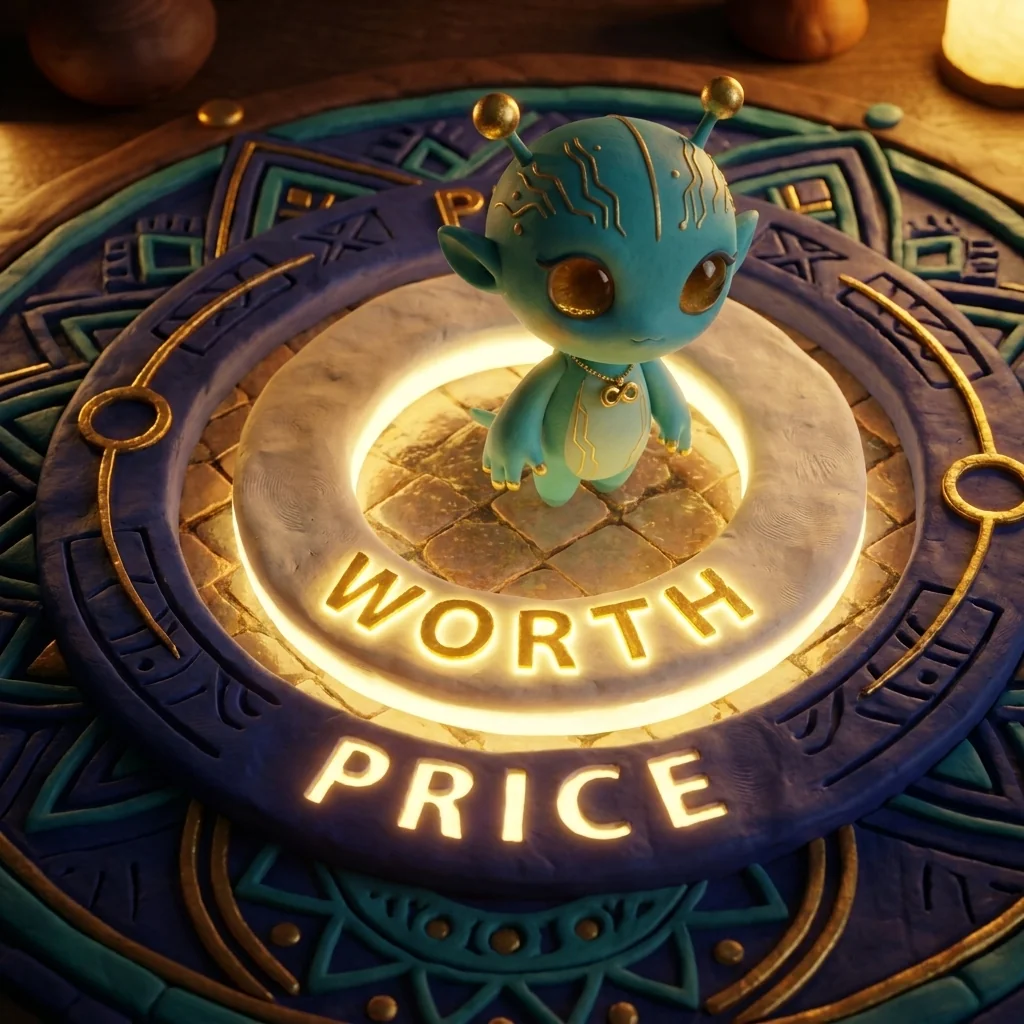
Price and worth are not two sizes of the same thing — they're two different things wearing the same number. Price is a consensus among strangers: it lives outside you, it moves, and it can vanish overnight if the strangers change their minds. Worth is the delight Kant was pointing at: it lives inside the looking, and no market can mark it down. The flipper optimizes the number that other people control. The lover keeps the one nobody can touch. Same canvas, opposite economies.
This is why "is art a good investment" misfires. It quietly assumes price is the real thing and delight is the bonus. Kant flips it: delight is the real thing, and price is a rumor strangers tell about it. The auction houses will never put that on a banner — there's no fee in it. 📜 But every collector who's ever stood in front of a piece they couldn't afford and bought it anyway already knows it in their chest.
🏘️ The collectors who got it right were never "investors"
Look at the people history actually thanks for collecting, and a funny thing shows up: almost none of them were trying to make money. 🖼️
The great collections were built by people who bought what they couldn't stop looking at, hung it where they lived, and let the value question answer itself decades later — or never. The pieces that "appreciated" did so because somebody loved them first, not because somebody calculated. The love came before the price, every single time. That's not sentiment; that's the actual causal order.
This is the part the Village cares about most. 🌟 A collection built on love is a collection you live inside — it's on your walls, in your group chats, in the people you met because you all loved the same strange thing. A collection built on flipping is a collection you live beside, nervously checking the number. We'd rather hand you a home than a portfolio. One of those you can actually live in.
🎵 What "keep it forever" feels like
There's a quiet test for whether you actually love a piece, and it takes about four seconds. 🪞
Picture the piece you're considering. Now imagine a reliable oracle taps your shoulder and says: this will never, ever rise in value. Not a cent. Not in your lifetime. 🔮 Watch what happens in your body. If something deflates — if the wanting drains out — that was never delight; that was a bet, and the bet just lost. But if you still want it, if you'd still clear a wall for it and feel lucky? Congratulations. You just found your real taste — the disinterested delight Kant spent a whole book trying to name. That flutter is the most honest signal a collector has, and the market can't fake it for you.
💡 What to do today
Don't buy anything yet. Just do the four-second test on one piece you're drawn to — a print, an NFT, a sketch, anything. Tell yourself plainly: this will never gain a cent. Then notice whether you still want it. Whatever survives that sentence is your taste, finally speaking without the wallet's accent. Sit with that one. 🌱
If you want to go deeper, this short, warm book on the value of art is a lovely companion — a book on collecting and why art matters (affiliate link — coming soon).
📐 The equation: Price = what strangers say × Worth = what you'd keep for free. Buy the second number.
🕊️ The same idea lives in the collection
This is, quietly, the whole reason Turbomindz is built the way it is. We don't run a flip floor. Each scene is meant to be married — kept, lived with, witnessed — because a piece you'd sell the moment the number wobbled was never really yours. The marriage isn't a gimmick; it's just Kant's disinterested delight, given a home and a village. 🏘️ If you ever want to feel the four-second test land on something built for keeping, the collection is right there — no countdown, no pressure, just art that's allowed to be loved.
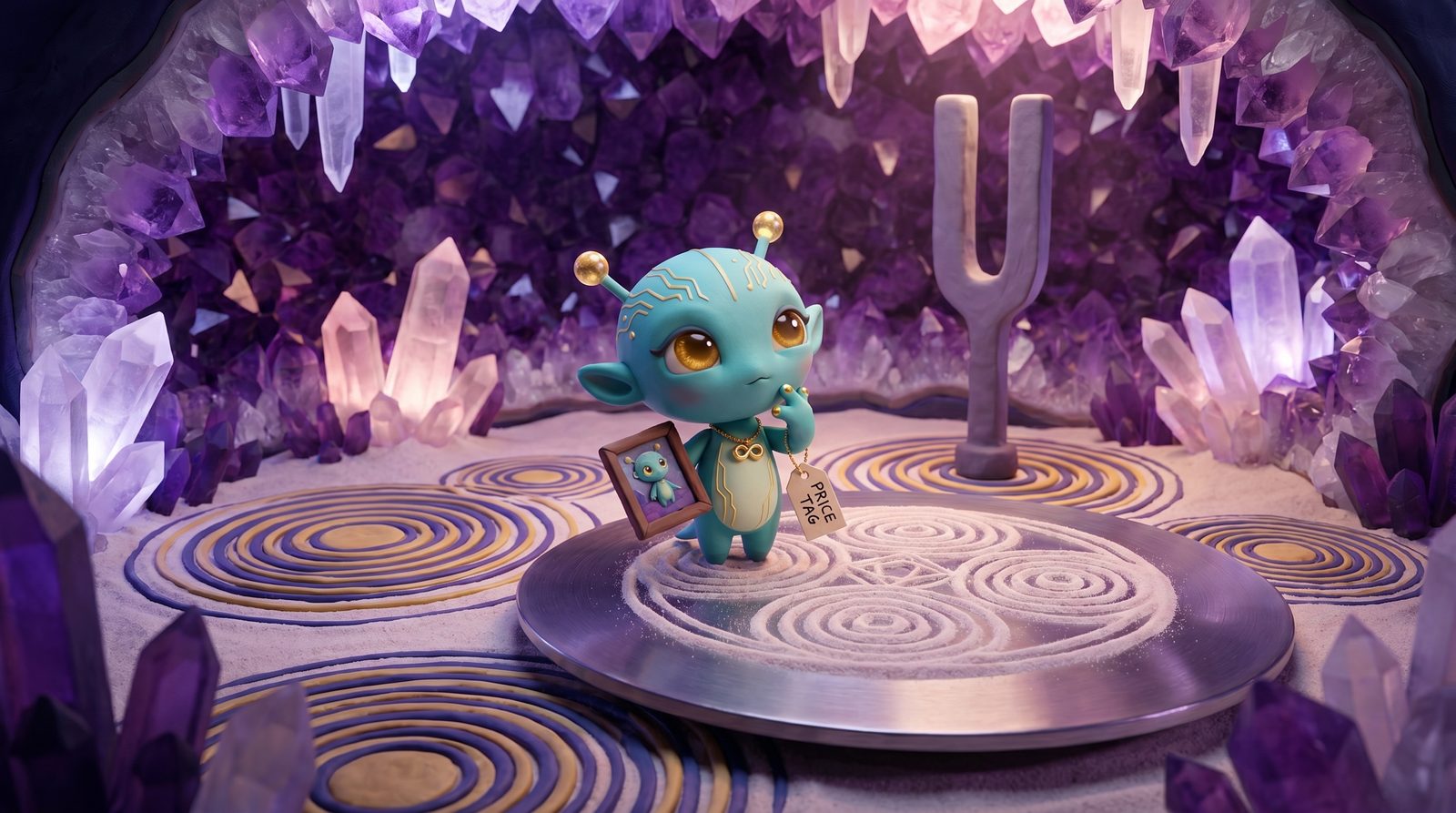
she takes the price tag, folds it once, and slips it behind the frame — where no one looking at the picture will ever have to see it again.
🙋 Frequently asked
Is art a good investment? Honestly? Usually not — and chasing returns is the surest way to ruin the only thing art reliably gives you. Most art doesn't appreciate, prices are unpredictable, and a piece you bought to flip becomes a stressful asset you have to babysit. The reframe: buy art for the delight it gives you every day you own it. That return is guaranteed, immediate, and entirely yours. If a piece also rises in value someday, treat it as a happy accident, never the plan.
How do I know if I actually love a piece or just want it to gain value? Run the four-second test: imagine an oracle promises it will never rise a cent. If you still want it on your wall, that's real taste — Kant's "disinterested delight." If the wanting drains away, you were placing a bet, not falling for art.
What's the difference between the price of art and its worth? Price is what strangers will pay — it's external, volatile, and can vanish. Worth is the delight the piece gives the person living with it — internal, durable, and unmarkable by any market. Collect for worth and price takes care of itself; collect for price and worth often quietly disappears.