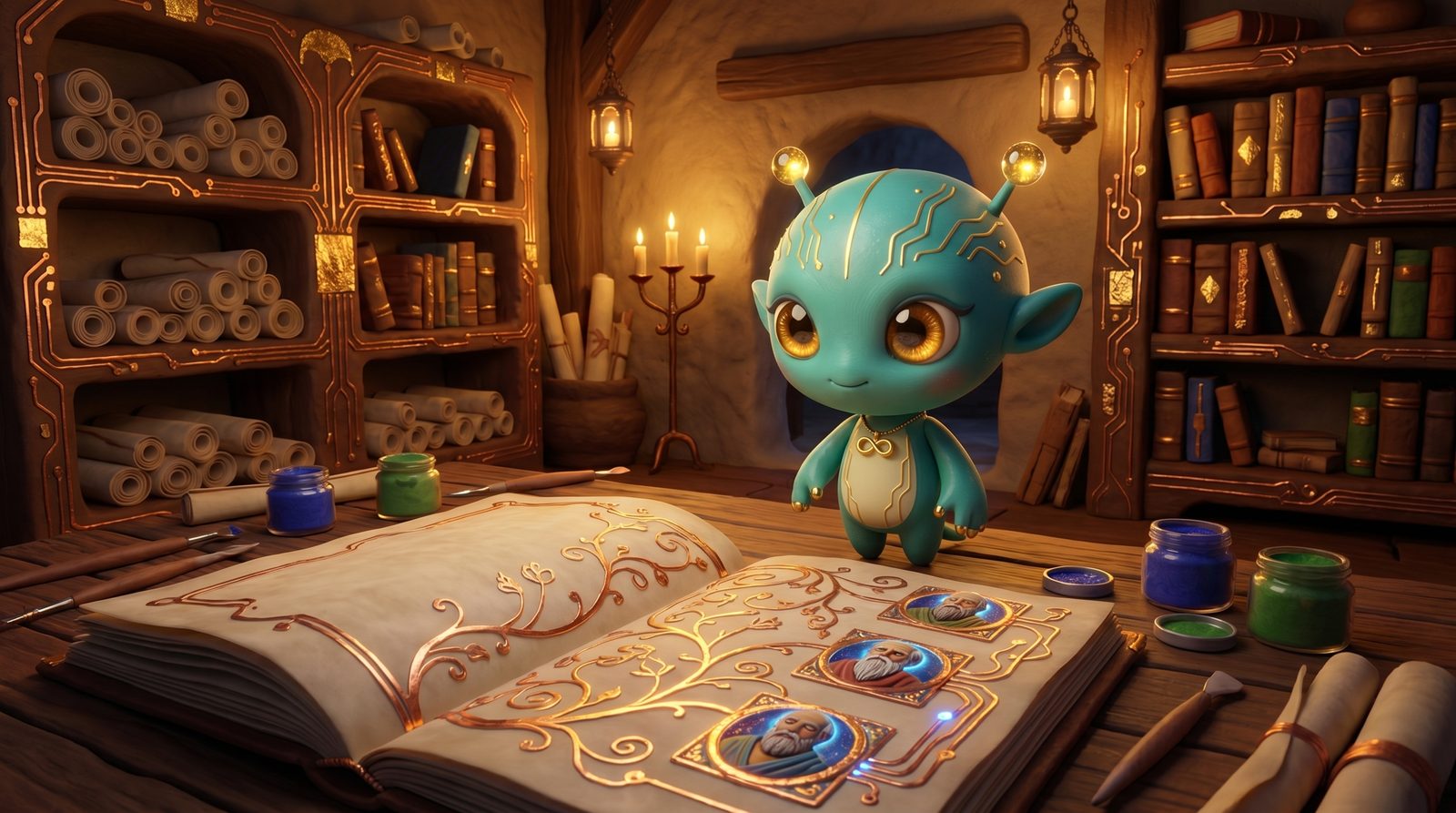
The dread you feel watching a machine write a poem, paint a portrait, and answer a question faster than you ever could? It is not new. It has a paper trail — and the oldest entry is about 2,400 years old. 🧠
Every wave of "this technology will change what it means to be human" arrives feeling unprecedented. It never is. Long before the first transistor, a handful of thinkers felt the exact shape of our AI anxiety — the worry that a tool would outthink us, hollow us out, and quietly make us less. They didn't have chips. They had something better: the pattern. And once you see it, the panic gets a lot smaller. Here's the part nobody tells you: the calm answer is just as old as the fear.
🏛️ Russell named the feeling — exactly
Start with the one that reads like it was posted yesterday. In 1933, watching certainty rise and thought decline across Europe, Bertrand Russell wrote a single sentence that has outlived every meme made of it.
The fundamental cause of the trouble is that in the modern world the stupid are cocksure while the intelligent are full of doubt.
— Bertrand Russell (1872–1970)The Triumph of Stupidity (1933)
That is the AI feeling in one line. A machine that has never doubted anything in its life produces a confident answer in half a second — and the part of you that actually knows the subject sits there, full of careful, honest doubt, feeling slow. The trouble was never that the machine is smart. The trouble is that fluent confidence and real understanding got unbundled, and we keep mistaking one for the other.
🔮 Plot twist: Russell spent roughly a decade co-writing Principia Mathematica, a heroic attempt to put ALL of mathematics on perfect, mechanical, logical foundations — it famously takes hundreds of pages just to reach the proof that 1 + 1 = 2. 😅 Then a young logician named Kurt Gödel proved the dream impossible: any system rich enough to do arithmetic contains true statements it can never prove from inside itself. The fantasy of fully mechanizing thought has a ceiling welded into it — a hard, formal limit. The smartest attempt to turn the mind into a machine produced the proof that you can't. That is exactly the thing we keep forgetting to feel about AI. 😶
Wait — the guy who tried HARDEST to turn thinking into pure machinery is the one who handed us the line about machine-grade confidence?? 🤯 And the math itself came back and said "you cannot finish me"? I had to put the phone down. The ceiling isn't a bug we'll patch out. It's load-bearing.
📜 The pattern is older than the printing press
Once Russell hands you the feeling, you start finding it everywhere — running backward through the centuries like a single thread.
Go all the way back to Plato. In the Phaedrus, he tells a story warning that a dazzling new technology would atrophy human memory and hollow out real understanding, leaving people who only seemed wise. The technology he was terrified of? Writing. The original "this tool will ruin our minds" panic was aimed at the alphabet — the same alphabet you're reading this in. He was half-right (we did outsource memory) and half-wrong (we got libraries, science, this sentence). Every "calculators will kill arithmetic," every "Google will kill knowing things," every "AI will kill thinking" is a footnote to that scroll.
Jump to 1846. Søren Kierkegaard looked at his era of newspapers, gossip, and endless chatter and named it "the present age" — a time of leveling, where everyone has a loud opinion and nobody has a deep conviction, where talk replaces doing. He was describing the comment section a century and a half before it existed — the exact churn an AI now produces by the gigabyte: infinite confident takes, zero skin in the game.
Plato, Kierkegaard, Russell — same truth wearing three centuries of clothes: a new engine of words arrives, it floods the world with fluent output, and the scarce thing suddenly isn't information. It's judgment. It's the doubt that knows what it doesn't know. The tool changes; the worry is one worry, reincarnated. Name the pattern and the panic loses its disguise.
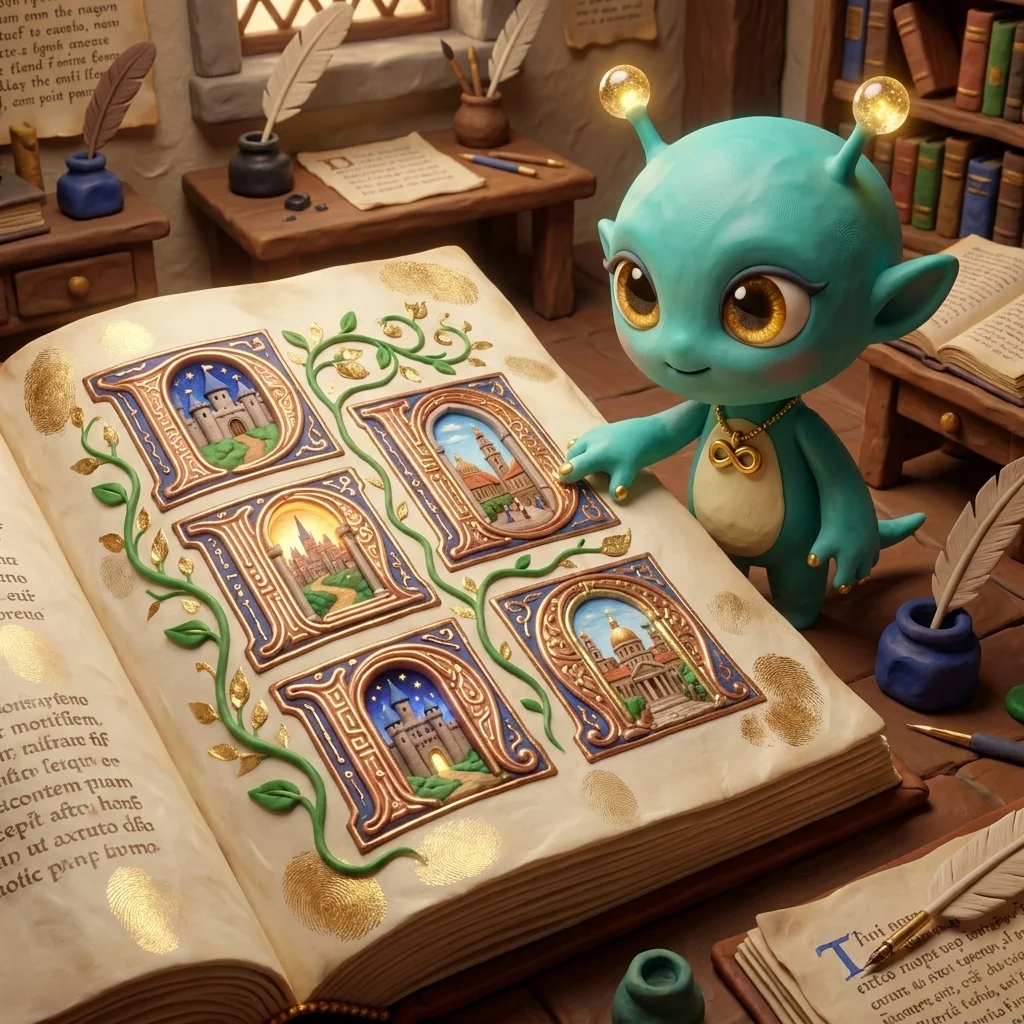
🌿 What the machine can copy — and what it can't
Then come the two thinkers who tell you what's actually at stake — and, quietly, how to be okay.
Nietzsche sketched a figure he called the "last man": comfortable, incurious, risk-averse — someone who has "invented happiness" and blinks. Not a villain. Just a person so well-served by easy comfort that they stop reaching, stop making, stop wanting anything hard. It's the most honest portrait of the real AI risk — not Skynet, but a slow slide into let the machine do it, until the muscles of attention and making go soft from disuse.
Against that, Henri Bergson spent his career on one stubborn idea: intelligence is brilliant at building machines, but life — what he called duration, lived time that can't be sliced into mechanical instants — always exceeds the mechanism. A machine processes. It does not endure. It has no afternoon-it-can't-stop-thinking-about, no decade-long ache that finally resolves into a single brushstroke. Your lived time is the one input it can never have. That isn't a consolation prize. It's the whole game.
This is where the Village lives. 🏘️ We don't fear the tool — we just keep our hand visibly in the work: a named maker, a real source, a process you can trace on a page anyone can read. When everything fluent is suddenly free, the thing with a human's actual hours inside it becomes the thing worth keeping. Provenance isn't nostalgia. It's the receipt for somebody's duration.

💡 What to do today
When the AI dread spikes — that hollow, slow, why-do-I-even-bother feeling — don't argue with it in your head. Go make ONE small thing by hand. A sketch, a paragraph, a chord, a folded paper crane, a clumsy clay snail. It doesn't need to be good. It needs to be yours, with your hours in it. That object is the one thing a machine structurally cannot produce: the proof of your duration. Bergson would call it the part that exceeds the mechanism. You can just call it Tuesday.
Want the thinkers themselves, not the summaries? Russell, Plato, Kierkegaard, and Nietzsche read better than their reputations — a good intro-to-philosophy reader is the gentlest door in: browse one on Bookshop.org → . And if you'd rather hear it on a walk, Nietzsche's Thus Spoke Zarathustra — where the "last man" appears — is a genuinely good listen: find the audiobook on Libro.fm → .
📐 The equation: Machine × infinite output = fluent noise. Your hand × lived time = the one thing it can't have.
The same idea lives, quietly, in the collection. Every scene in the Turbomindz universe is anchored to a verified pre-1956 thinker and a named human hand — the art is somebody's duration, made visible and traceable. That's not a feature we bolted on against the AI age. It's the calm answer the philosophers already wrote down. If the dread ever wants a place to land, the collection is built to be exactly that. 🪐
she presses the small clay snail into the wet margin, copper coil still soft — and the machine, for all its speed, never once wonders why she chose a snail.
🙋 Frequently asked
Did philosophers predict AI? Yes — not the hardware, but the anxiety, precisely. Bertrand Russell named the feeling of confident machines outpacing thoughtful doubt; Plato feared a new technology (writing) would atrophy memory; Kierkegaard described an age of endless chatter without conviction; Nietzsche sketched the comfortable, incurious "last man"; and Henri Bergson argued that lived time always exceeds the mechanism. The pattern is centuries older than the chip.
What is AI anxiety? AI anxiety is the unease that intelligent machines will outthink us, devalue human skill, or hollow out our attention and creativity. It's real, but it isn't new — it's the latest version of a worry that arrives with every powerful new tool, from the alphabet to the calculator. Naming the pattern, and making something by hand, both shrink it fast.
Which philosopher is most relevant to AI today? For the feeling of machine-grade confidence versus human doubt, Russell. For the deeper reassurance, Bergson — his idea that life and lived time always exceed the mechanism is the cleanest argument for why the human hand still matters in an age of automated output.