Read by Stella.
Stella
Essays written by or featuring Stella.
Why Cultures All Over the World Made Tiny Clay Figures
On every inhabited continent, for tens of thousands of years, humans shaped little clay beings by hand. The oldest fired-ceramic object on Earth isn't a pot — it's a figurine. Why we keep doing it.

From Doodler to Collector: How Making Art Teaches You to Buy It Better
A warm, no-gatekeeping case that making art — even badly — is the fastest way to become a better collector. Pick up a pencil this week and watch how differently you start to see the work you buy.

What Does It Actually Mean to Own a Piece of Art?
A receipt proves possession, not ownership. The deepest honest answer to 'what do you own?' is 'a process I keep choosing to participate in' — which is exactly what a vow, or a marriage, formalizes.

7 Strange and Beautiful Art Traditions That Will Change How You See Beauty
Seven art traditions that look strange until you understand them — sand mandalas swept away on purpose, paintings that are secretly maps, scrolls as tall as you. Each carries a rule worth stealing.

Who Actually Owns AI Art? A Plain-English Look at the 2025 Copyright Rulings
Who owns AI art? Plain-English: the 2025 US Copyright Office says purely AI-generated images aren't copyrightable — only the human-authored parts are. Here's what that actually means for you.

Living With Art: How to Display and Actually Enjoy What You Collect
A warm, practical guide to displaying and actually enjoying the art you collect — eye-level, light, placement, and rotation — so a piece you bought becomes a piece you live with.

5 Pre-1956 Philosophers Who Predicted Our AI Anxiety
The dread you feel about AI isn't new. Five thinkers — Russell, Plato, Kierkegaard, Nietzsche, Bergson — named it centuries before the first chip. The calm answer is older too: the human hand.

Sacred Geometry: The Hidden Math Behind Beautiful Art
What is sacred geometry, and is the golden ratio actually real in art? A friendly tour of the hidden math behind beauty — and a system you can steal for your next composition today.

Alebrijes: Mexico's Riot of Dream-Creatures, Explained
A donkey with butterfly wings, a rooster with a bull's horns — alebrijes are Mexico's riot of dream-creatures. They weren't designed; they were dreamed, by one feverish man in 1936.

A Stoic's Guide to Not Doomscrolling
A Stoic guide to reclaiming your attention from the feed, for makers. Seneca said we don't have too little time — we waste most of it. Here's how to take an hour back and make something.

Want to Try Claymation? A No-Camera-Needed Beginner's Guide
A genuinely useful beginner's guide to claymation: no special camera, one fist of clay, your phone, a free stop-motion app, and the one trick — shoot 'on twos.'

The Psychology of Falling in Love With a Piece of Art
Why can a piece of art stop you in your tracks or make you tear up? The psychology of beauty, recognition, and attention — and why that feeling is what a marriage in the Village is built on.

Kintsugi: The Japanese Art of Making Broken Things More Beautiful
We hide our cracks. A whole culture decided to gild them. Kintsugi — mending broken pottery with gold — is a living idea any maker can use: the seam is the most beautiful part.

Buying Art With Your Heart, Not Your Wallet: A Case Against Art-as-Investment
Is art a good investment? The honest answer reframes the question. A gentle case — refereed by Kant — for buying the piece you'd keep even if it never rose a cent.

How to Start an Art Collection With $50 (and Why That's the Best Way to Begin)
A warm, no-gatekeeping guide to starting an art collection with $50 — why a small budget chosen with real attention beats a huge one bought to impress, with one concrete thing to do today.
The Phygital Marriage: When a JPEG Needs a Body
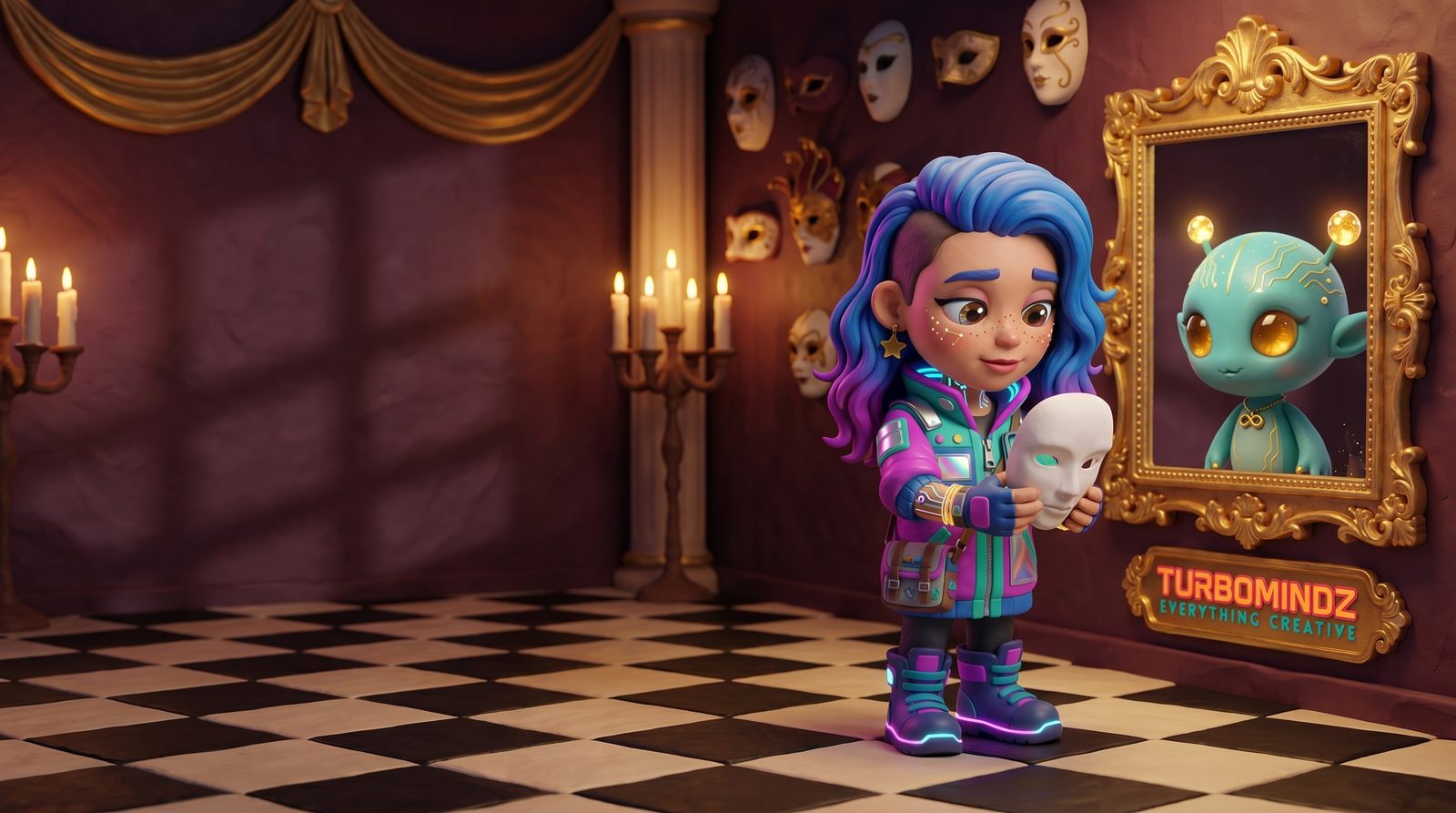
Phygital art usually means one OR the other — keep the JPEG or claim the painting. The Turbomindz marriage system is an AND. A carnival-mask theory of NFTs.

Wallace, Gromit, and the Heresy of Slow
A short claymation history of slowness as a moral position: Aardman shoots 10 seconds a day, Laika printed 6,333 faces — and why digital craft must keep the fingerprints.

What Steyerl & Anadol Actually Disagree About
The AI art ethics fight isn't tool vs. soul — Steyerl and Anadol are each half-right, and the synthesis is provenance. Walter Benjamin referees.
